Landmark West! wishes to comment on the application to the Board of Standards and Appeals for the conversion of the former First Church of Christ, Scientist (Carrère and Hastings, 1899-1903, an Individual Landmark designated in 1974) into a 39-unit residential building, requiring six waivers under the New York City Zoning Resolution and Multiple Dwelling Law.
Read our full submission to the NYC Board of Standards and Appeals here.

Preserving the best of the Upper West Side's neighborhood character and architectural heritage.
Showing posts with label architecture. Show all posts
Showing posts with label architecture. Show all posts
Wednesday, August 12, 2015


Wednesday, August 5, 2015
Upcoming Events - September 2015
Dear Friends of LANDMARK WEST!:
We have some exciting events coming up here at LW! to get you through these dog days of summer. Here is a sampling of our programs taking place in September:
 Learn the ABCs of Central Park with Gerald Lynas!
 Central Park
Monday, September 7, 10:00am
A great Labor Day activity for the whole family!
Through the alphabet and numbers, artist/author G. Augustine Lynas introduces youngsters to the wonder and beauty of New York's Central Park, a NYC Scenic Landmark. First, we will discover where Lynas found inspiration for his book The ABCs of Central Park, then we will use our own keen eyes to snap candid photos of what Lynas calls "alpha-branches" and "number-limbs!" Check out Lynas' book here and see some pictures from our last tour with Lynas here.
Through the alphabet and numbers, artist/author G. Augustine Lynas introduces youngsters to the wonder and beauty of New York's Central Park, a NYC Scenic Landmark. First, we will discover where Lynas found inspiration for his book The ABCs of Central Park, then we will use our own keen eyes to snap candid photos of what Lynas calls "alpha-branches" and "number-limbs!" Check out Lynas' book here and see some pictures from our last tour with Lynas here.
$5 per person. To make a reservation, please email landmarkwest@landmarkwest.org or call (212) 496-8110.
 Roberta Brandes Gratz Book Talk Celebrates Launch of
 We're Still Here Ya Bastards: How the People of New Orleans Rebuilt Their City
Book Culture, 450 Columbus Avenue (between 81st & 82nd)
Wednesday, September 9, 6:30pm
Join
LW! as we remember Hurricane Katrina (2005) and celebrate 10 years of
steady urban regeneration in the historic city of New Orleans.
Award-winning journalist, urban critic, and author Roberta Brandes Gratz will guide us through her newly released publication, We're Still Here Ya Bastards: How the People of New Orleans Rebuilt Their City. Gratz's book provides a powerful account of how community activists are leading their city's recovery.
$15, $10 for LW! members. To make a reservation, please email landmarkwest@landmarkwest.org or call (212) 496-8110. Reservations also available through Eventbrite by clicking here.
 An Architectural Walking Tour of Lincoln Center with architectural historian Thomas Mellins
Lincoln Center
Wednesday, September 30, 6:00pm
Join us as we explore Lincoln Center for the Performing Arts with Thomas Mellins, an architectural historian, independent curator, and author who has curated exhibitions for Jazz at Lincoln Center, the National Building Museum, the Yale School of Architecture, and many others. Mellins will lead us through the country's largest performing arts center, a space which represents the unity and talent of several prominent architects of the mid-20th century. Then-starchitects Max Abramovitz, Pietro Belluschi, Gordon Bunshaft, Wallace Harrison, Eero Saarinen, Skidmore, Owings & Merrill, and Phillip Johnson collaborated to create a world-class center of the arts in Manhattan, defined by an overall aesthetic that synthesized Classicism and Modernism. The tour will also highlight the recent redevelopment project, designed by Diller Scofidio + Renfro. Lincoln Center is on LW!'s Wish List of landmark designation priorities, and it was determined eligible for the National Register of Historic Places in 2000.
$25, $15 for LW! members. To make a reservation, please email landmarkwest@landmarkwest.org or call (212) 496-8110. Reservations also available through Eventbrite by clicking here.
Wednesday, October 15, 2014
How Architecture Works: A Humanist's Toolkit - An Illustrated Talk and Book Signing with Witold Rybczynski

How Architecture Works: A Humanist's Toolkit
An Illustrated Talk and Book Signing with Witold Rybczynski
With an introduction by Jacob Weisberg*
welcoming remarks by Kate Wood
With an introduction by Jacob Weisberg*
welcoming remarks by Kate Wood
Tuesday, October 28, 2014 6:30 PM
Macaulay Honors College, 35 West 67 Street

How Architecture Works is a humanist's toolkit for thinking about the built environment and seeing it afresh. In his book, Rybczynski says, "Most
architecture, a backdrop for our everyday lives, is experienced in bits
and pieces - the glimpsed view of a distant spire, the intricacy of a
wrought-iron railing, the soaring space of a railroad station waiting
room. Sometimes it's just a detail, a well-shaped door handle, a window
framing a perfect little view, a rosette carved into a chapel pew. And
we say to ourselves, 'How nice. Someone actually thought of that.'"
Modern
architecture runs the gamut from fantasy to engineering to retro. This
book introduces readers to the rich and varied world of contemporary
design, and takes them behind the scenes, showing how architects as
varied as Philip Johnson, Frank Gehry, Renzo Piano and Robert A. M.
Stern work their magic. From a war memorial in London to
an opera house in St. Petersburg, from the National Museum of African
American History and Culture in Washington, to an architect's private
retreat in downtown Princeton, Rybczynski explains the central elements
that constitute good building design.
"...ever the engaging and thoughtful writer, [Rybczynski]
offers a wide-ranging tour of the glories and curiosities, old and new,
in the field." - Washington Post
"[This] expert, holistic, down-to-earth guide awakens us to architecture's profound humanness." - Booklist
*Jacob Weisberg is the Chairman of The Slate Group. He is a writer, editor, and political commentator, whose work has been featured in Vanity Fair, The New York Times Magazine and Newsweek. He is also the author of The Bush Tragedy, a 2008 New York Times bestseller.
*Jacob Weisberg is the Chairman of The Slate Group. He is a writer, editor, and political commentator, whose work has been featured in Vanity Fair, The New York Times Magazine and Newsweek. He is also the author of The Bush Tragedy, a 2008 New York Times bestseller.
Tickets are $20 for LW! members; $25 for non-members;
To inquire about your membership status and/or to purchase tickets
email landmarkwest@landmarkwest.org, or call (212) 496-8110.
You may also buy tickets online via Eventbrite.Thursday, July 11, 2013
Lincoln Center: Philharmonic Hall!
By Jennifer Perez
When one thinks of dancing, singing, music, and so on, many New Yorkers automatically think of Lincoln Center; for it is a world-famous center for performing arts. Lincoln Center for the Performing Arts, (between Columbus and Amsterdam Avenues, West 62nd and West 66th Streets) was announced as a project on April 21,1955. It was designed and created by architects Max Abramovitz, Pietro Belluschi, and Eero Saarinen. Lincoln Center consists of many components: the New York State Theater, Metropolitan Opera House, Philharmonic Hall and many more. From my walk around the area, the building that stood out to me more than any other was the Philharmonic Hall. It stood out to me due to the large windows and amazing piers surrounding the building.
The Philharmonic Hall also known as Avery Fisher Hall, was the first building at Lincoln Center to be completed. It opened to the public on September 23, 1962 and was designed by Max Abramovitz of Harrison & Abramovitz. Something I found interesting when researching this building was the original, unbuilt plan for the site. The original design for the Philharmonic Hall was to be a five-story, glass-walled building surrounded by a travertine-coated concrete arcade consisting of nine spaced piers that reminded me of ladders. These nine piers were designed to be 60 feet tall and finished off with 22-foot wide pointed arches. They were suppose to run along the north and south facades while eleven piers ran along the adjacent sides. This design was eventually overthrown with a new design that is today's structure. The new design consists of an arcade only on the plaza side with solid piers 70 feet tall tapered at both ends and finished off with shallow, rounded arcs.
The way the building looks just catches my attention for it looks like long multiple columns attached to each other running along the side of the building while the building is within these structures, almost like a hostage, as if it's a box within a box. Another reason why I find the Philharmonic building so interesting is because it has layers and layers of piers that at times create illusions when walking by it or in photographs. When I was reviewing the newsletters from LW! I came across Lincoln Center and couldn't get it out of my head. It popped out from the other buildings and/or areas on the Upper West Side. Mainly because it's the center of the neighborhood and it includes three well-structured buildings that have similar designs but are also distinctive. Many people may not find this building or any other one so interesting but to me it stood out and that's the reason why I like it.
When one thinks of dancing, singing, music, and so on, many New Yorkers automatically think of Lincoln Center; for it is a world-famous center for performing arts. Lincoln Center for the Performing Arts, (between Columbus and Amsterdam Avenues, West 62nd and West 66th Streets) was announced as a project on April 21,1955. It was designed and created by architects Max Abramovitz, Pietro Belluschi, and Eero Saarinen. Lincoln Center consists of many components: the New York State Theater, Metropolitan Opera House, Philharmonic Hall and many more. From my walk around the area, the building that stood out to me more than any other was the Philharmonic Hall. It stood out to me due to the large windows and amazing piers surrounding the building.
 | |||
| The Original Design of Philharmonic Hall (1959) [From New York 1960 by Robert A.M. Stern et al] |
The Philharmonic Hall also known as Avery Fisher Hall, was the first building at Lincoln Center to be completed. It opened to the public on September 23, 1962 and was designed by Max Abramovitz of Harrison & Abramovitz. Something I found interesting when researching this building was the original, unbuilt plan for the site. The original design for the Philharmonic Hall was to be a five-story, glass-walled building surrounded by a travertine-coated concrete arcade consisting of nine spaced piers that reminded me of ladders. These nine piers were designed to be 60 feet tall and finished off with 22-foot wide pointed arches. They were suppose to run along the north and south facades while eleven piers ran along the adjacent sides. This design was eventually overthrown with a new design that is today's structure. The new design consists of an arcade only on the plaza side with solid piers 70 feet tall tapered at both ends and finished off with shallow, rounded arcs.
 |
| Current status of Philharmonic Hall |
 |
| The 70 ft tall Piers that surround the building! |
Tuesday, July 9, 2013
Meet the Intern: Jennifer
My name is Jennifer Perez and I recently completed my junior year at the Williamsburg High School for Architecture & Design (WHSAD). This school has developed my passion for architecture and interior design even more than I thought possible. I've learned how to design buildings, playgrounds, neighborhoods, etc in AutoCAD, what damages buildings and what you can do to restore it without ruining the character of the building. Since I was a kid, the thought of having an idea and bringing it to life by designing it on paper and having it built over time fascinated me. The way buildings look both the exterior and the interior have always caught my attention.When I hear about buildings that have significant histories being demolished or changed; it gets me thinking," Why would they want to get rid of something so meaningful that makes New York City so special?" We should appreciate all the buildings, rather than just the flashy ones.
.JPG) When I came upon the opportunity to intern with an organization that preserves historic buildings and fights to protect them as Landmarks, I right away took the chance. I am excited to be able to experience the process to fight for the landmarks and what occurs during the process. What I hope to experience on this internship with Landmark West! is to be able to learn from the people I'll be working with and learn more about significant buildings on the Upper West Side, what has been happening to them over time, and what LW! does to keep these buildings landmarked and protected from being destroyed. I intend to help save buildings that should be landmarks during this internship and hope to pass down my ideas or views of certain things to my fellow co-workers that may help them in the future.
When I came upon the opportunity to intern with an organization that preserves historic buildings and fights to protect them as Landmarks, I right away took the chance. I am excited to be able to experience the process to fight for the landmarks and what occurs during the process. What I hope to experience on this internship with Landmark West! is to be able to learn from the people I'll be working with and learn more about significant buildings on the Upper West Side, what has been happening to them over time, and what LW! does to keep these buildings landmarked and protected from being destroyed. I intend to help save buildings that should be landmarks during this internship and hope to pass down my ideas or views of certain things to my fellow co-workers that may help them in the future.
Just like Ezra Pound said," A real building is one on which the eye can light and stay lit," meaning real architecture is buildings or structures that catch one's attention and still catch it no matter how old it is. The building or structure should last a long period of time and eventually become significant to its neighborhood. This is what LW! is well known for: protecting buildings that catch one's attention and fighting for their right to become landmarks.Architecture is something people should value more, they're not just buildings we live in or work in, they have history and meaning.One may only notice this if they actually sit down and read and realize what architecture does for us and what it has to offer but yet many are too busy to even do that. That's why people like us who are interested should help others who are not aware to join the fight to help preserve buildings and make them into landmarks rather than an empty space or dust of history.
.JPG)
Just like Ezra Pound said," A real building is one on which the eye can light and stay lit," meaning real architecture is buildings or structures that catch one's attention and still catch it no matter how old it is. The building or structure should last a long period of time and eventually become significant to its neighborhood. This is what LW! is well known for: protecting buildings that catch one's attention and fighting for their right to become landmarks.Architecture is something people should value more, they're not just buildings we live in or work in, they have history and meaning.One may only notice this if they actually sit down and read and realize what architecture does for us and what it has to offer but yet many are too busy to even do that. That's why people like us who are interested should help others who are not aware to join the fight to help preserve buildings and make them into landmarks rather than an empty space or dust of history.
Friday, May 10, 2013
Rally to Save the New York Public Library
As reported by intern Melissa Doherty
Yesterday, a rally was held at the 42nd street New York
Public Library in protest of the Central Library Plan (CLP), during a meeting
of the library’s trustees. This plan, proposed by architect Norman Foster,
claims to be restoring one of Manhattan’s most beloved landmarks, when, in
actuality, it is endangering the architectural integrity of Carrère and
Hastings’ original and irreplaceable Beaux-Arts design.
Costing at least $350,000,000, of
which $150,000,000 will come from New
York City taxpayers, this plan intends to demolish the
historic book stacks and install a new circulating library. In addition, it
threatens to relocate 1.5 million books to remote storage in New Jersey.
There was a strong turnout of exuberant and enthusiastic individuals who truly believed in the cause. They received countless petition signatures from passersby, showing the evident public concern for the well-being of the library. Even in the rain, on the steps of the NYPL, protestors held their signs high, some of them reading “$350,000,000 to gut this historic library while branch libraries are closing,” “No, No, Norman,” and “Your library destroyed with no public input.” Whistles were blown and chanting ensued as the trustees left the meeting, in which the CLP was conferred. Protestors stood side-by-side with the library’s marble lions, “Patience” and “Fortitude,” fighting to save this monumental piece of New York City’s history.
 |
| Protestors on the steps of the NYPL |
There was a strong turnout of exuberant and enthusiastic individuals who truly believed in the cause. They received countless petition signatures from passersby, showing the evident public concern for the well-being of the library. Even in the rain, on the steps of the NYPL, protestors held their signs high, some of them reading “$350,000,000 to gut this historic library while branch libraries are closing,” “No, No, Norman,” and “Your library destroyed with no public input.” Whistles were blown and chanting ensued as the trustees left the meeting, in which the CLP was conferred. Protestors stood side-by-side with the library’s marble lions, “Patience” and “Fortitude,” fighting to save this monumental piece of New York City’s history.
Thursday, May 9, 2013
Meet the Newest Addition to LW!
My name is Melissa Doherty and I just completed my sophomore
year at Franklin & Marshall
College in Lancaster , PA.
I grew up visiting Manhattan
on a regular basis and its historic sites have always intrigued me. I was
fascinated, early on, by structures in my own hometown of Roslyn , NY
I have completed courses in Islamic Art & Architecture,
Architecture of Lancaster and Architectural Design. The course I completed on
the architecture of Lancaster ,
PA
I came upon LANDMARK WEST! in my research of the field of
architectural preservation and it seemed like the perfect way to further
explore this captivating subject. I am very excited to learn more about the
historic structures of the Upper West Side and
the vital advocacy process.
.JPG)
Tuesday, March 12, 2013
Designate the West End's Historic District Extensions NOW

A picture is worth a thousand words.
Question: How could this out-of-context building get built?
Answer: These 4 rowhouses were not designated NYC Landmarks when the then-owner of 2 Riverside Drive built on this site. The moral of the story? Please do not take your neighborhood for granted. 2 Riverside Drive is proof of what can happen. It is urgent that you tell the LPC to "Vote yes now on Manhattan's West End Historic District Extensions." The Riverside/West End Historic District Extension II and the West End Collegiate Extension--vital to Manhattan's Upper West Side Historic Districts--have been HEARD by the LPC but NOT designated.
Sign this petition to LPC Chair Tierney and ask for the designation NOW of these Historic District (HD) extensions. Please sign soon--sign now--then send on to a friend to sign. The LPC deserves to hear from you.
Approximately 194 new landmarks were added to the 2700 existing landmarked buildings when the Riverside/West End HD Extension I was designated on June 26, 2012. Take a moment to join us in relishing the pure pleasure of a job well done. Jacqueline Kennedy Onassis wrote her own letter to the LPC, dated April 30, 1987 in support of designating the Riverside/West End HD. Mrs. Onassis wrote, "Your designation of [the Riverside-West End HD] will provide future generations of New Yorkers the opportunity to enjoy the beauty of this remarkably intact piece of our past, just as we enjoy it today." Please sign the petition and if you wish, write your own letter and email a copy to LANDMARK WEST!
Designation is just the first step. Help us be the vigilant stewards our neighborhood still needs and deserves. Big or small, your contribution matters. Give online or call LW! at 212-496-8110 to make a financial pledge.

Designation is just the first step. Help us be the vigilant stewards our neighborhood still needs and deserves. Big or small, your contribution matters. Give online or call LW! at 212-496-8110 to make a financial pledge.
Photo above from LW!'s, My Preservation Journal, part of Keeping the Past for the Future Youth Education Program taught by Director of Education Debi Germann, M.S. Ed from the Bank Street College of Education and certified classroom teacher.
Thursday, February 14, 2013
From the LW! Archives...1987 Letter from Jacqueline Kennedy Onassis Supporting the Original Riverside/West End Historic District

In 1985, when LANDMARK WEST! was founded to advocate for more widespread protection of our neighborhood's architectural heritage, the Upper West Side only had 337 designated landmarks.
With the recent Riverside-West End HD Extension I designation, approximately 194 new landmarks have been added to the West Side's noble roster.Take a moment to join us in relishing the pure pleasure of a job well done. Our smiles get even wider when we look back at this prescient letter from Jacqueline Kennedy Onassis to the LPC, dated April 30, 1987.
She wrote: “Your designation of [the Riverside-West End HD] will provide future generations of New Yorkers the opportunity to enjoy the beauty of this remarkably intact piece of our past, just as we enjoy it today.”
The district was officially designated two years later, on December 19th, 1989. Don’t take your neighborhood for granted--extensions II & III have been heard but NOT designated. Email LPC Chair Tierney at comments@lpc.nyc.gov and tell him, “I support the designation of the Riverside-West End Extensions II & III.” Sign your name--email it soon--today, if possible. Send a copy to landmarkwest@landmarkwest.org.
Tuesday, January 29, 2013
Grand Central Terminal Tour Recap
.JPG)
Last Saturday, January 26th, LANDMARK WEST! and friends joined noted guide Justin Ferate for an engaging tour of one of New York's most majestic and welcoming buildings, Grand Central Terminal.
Beginning the tour across Park Avenue and gradually making our way inside, Justin highlighted small yet significant aspects of the building that create a sense of grandeur for visitors. Sets of doors in the entryway, which no longer exist, used to hide the view of the main hall so visitors would be held in suspense about the interior until experiencing it for themselves.
One of the especially delightful aspects of Grand Central is its monumental scale, with classically-inspired ornamentation, that exists alongside many features designed at a human scale. Justin explained this in his engaging and enthusiastic style by demonstrating that the length of each floor tile is the same as a human leg, with the width equal to one step.
.JPG)
The tour featured additional treasures of Grand Central, including a remnant of the old yellow bricks that used to pave Park Avenue leading up to Grand Central, which still exists in the parking garage of the old Biltmore Hotel, and of course the whispering gallery beneath an impressive Guastavino tiled ceiling.
LW! thanks Justin Ferate for leading a fascinating tour in anticipation of Grand Central's centennial celebrations later this week.
Wednesday, September 19, 2012
Tonight, Experience the Architecture of Cuba
"Say the word Cuba and most people think dictators, the prison at
Guantánamo Bay, and Communism with palm trees. Architect Hermes Mallea
believes there is so much more to the country and has the pictures to
prove it." -- Architectural Digest
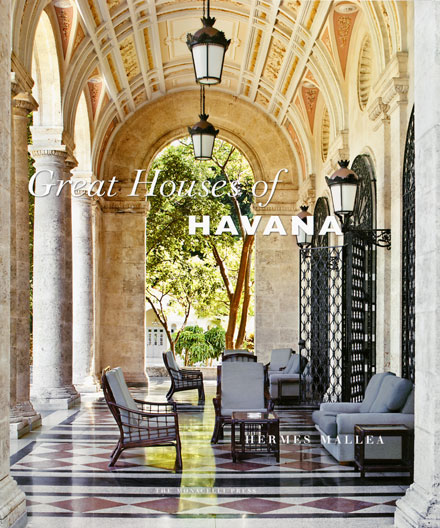 This evening, LANDMARK WEST! hosts the illustrated slide lecture "Great Houses of Havana", featuring architect and author Hermes Mallea.
In his book Great Houses of Havana: A Century of Cuban Style (The Monacelli Press, November 2011) Hermes Mallea gives the first-ever insider's tour of Havana's architectural gems, bringing the reader inside never-before-published homes, presenting their fascinating personal histories alongside Havana's architectural patrimony.
Mallea presents portraits of important homes built in the city between 1860 and 1960, beginning with the extraordinary images taken by American photographer, George Barnard, who was permitted to bring his camera into the intimacy of the Palace of the Counts of Santovenia. These pictures set the standard for giving the reader access inside a famously closed world.
Read more about Hermes Mallea's book on Architectural Digest online.
In his book Great Houses of Havana: A Century of Cuban Style (The Monacelli Press, November 2011) Hermes Mallea gives the first-ever insider's tour of Havana's architectural gems, bringing the reader inside never-before-published homes, presenting their fascinating personal histories alongside Havana's architectural patrimony.
Mallea presents portraits of important homes built in the city between 1860 and 1960, beginning with the extraordinary images taken by American photographer, George Barnard, who was permitted to bring his camera into the intimacy of the Palace of the Counts of Santovenia. These pictures set the standard for giving the reader access inside a famously closed world.
Read more about Hermes Mallea's book on Architectural Digest online.
Friday, August 31, 2012
An Unexpected Find On West 70th Street
A guest post by IHDF Intern Jonathan Ortiz
Last week, I went out looking at buildings, searching for something that caught my eye. As I was walking, I decided to give myself a challenge: try to find a unique row house.
I walked past so many of them but I was having trouble finding something that really stood out. Right when I was about to start looking for another kind of building, I noticed something on a row house bay window -- a very elaborate ornament. It was a very impressive piece of work, with an elegant flower design surrounding a crest right in the middle.

Amazed by my find, I looked at the building next to it and, sure enough, it was the same type of ornament, but with a slightly different design. This went on for about six more buildings, all with elaborate designs.
The ones that I favor are 27, 31, 33, 37, and 41 on West 70th Street. They were designed by architect Gilbert A. Schellenger and built in 1892. If you are ever taking a stroll on this street or just have some free time, I strongly suggest you go pay these buildings a visit.
Search more buildings by architect Gilbert A. Schellenger in the LW! Online Buildings Database!
Last week, I went out looking at buildings, searching for something that caught my eye. As I was walking, I decided to give myself a challenge: try to find a unique row house.
I walked past so many of them but I was having trouble finding something that really stood out. Right when I was about to start looking for another kind of building, I noticed something on a row house bay window -- a very elaborate ornament. It was a very impressive piece of work, with an elegant flower design surrounding a crest right in the middle.
Amazed by my find, I looked at the building next to it and, sure enough, it was the same type of ornament, but with a slightly different design. This went on for about six more buildings, all with elaborate designs.
The ones that I favor are 27, 31, 33, 37, and 41 on West 70th Street. They were designed by architect Gilbert A. Schellenger and built in 1892. If you are ever taking a stroll on this street or just have some free time, I strongly suggest you go pay these buildings a visit.
Search more buildings by architect Gilbert A. Schellenger in the LW! Online Buildings Database!
Tuesday, August 28, 2012
Savor the Summer with the LW! iPhone App
"This app is your personal tour guide, offering
information and insights on West Side buildings and blocks from a uniquely local perspective."
-- LW! App Fan
 |
| IMAGE: The southern tower of the San Remo Apartments, as seen from Central Park. 145-146 Central Park West, b/w W. 74th & W. 75th Sts. Built: 1929-1930. Architect: Emery Roth |
There's less than a week until Labor Day brings Summer 2012 to an
unofficial close. Don't let the season end without exploring the rich history of
our Upper West Side neighborhood! Let LW's FREE iPhone walking tour
app be your handheld guide to all the "Fun Facts" and "Did you know" details
you never knew!
It's New and Improved!
LW! has worked out the kinks (you wrote us; we listened!) and
relaunched its free Upper West Side walking tour iPhone app.
Designed by local experts for people of all ages and interests, LW's
walking tour app is an innovative way to explore the architecture and history of
one of New York City's most beloved and vibrant neighborhoods. Meant to appeal
to a wide rage of users from residents to visitors to the city, families, and
armchair travelers, the free app tour highlights 35 landmark locations
including the legendary Dakota Apartments, Beacon Theatre, Ansonia Hotel and
Central Park. Each location features intriguing facts and striking
photographs that tell the story of the Upper West Side's development since the
19th century.
Preview the LW! app by visiting our blog!
 |
| Click here to begin your preview of the FREE LW! walking tour app! |
What the App Users Are
Saying (more
here!):
"This app is a great way to see New York City's Upper West Side. I downloaded it at home, learned about some of the interesting locations and checked out a few stops on the walking tour. It's great for people visiting the city AND for people who have lived there their entire lives."
"Wonderful way to experience NYC architecture!"
Tuesday, August 14, 2012
640 West End Avenue: A Neighborhood Favorite!
A guest post by IHDF intern Jonathan Ortiz

My favorite building on the Upper West Side is 640 West End Avenue, at West 91st Street. It is my favorite because it stands out from a mile away. One side of the building is almost completely covered in ivy, which in my opinion gives it a very good, mesmerizing look. I mainly like it because it doesn't follow the standard look of buildings in the area, it has its own identity.
Because this building captured my attention, I did some research. here are some things I found interesting: The building was designed by the architecture firm Townsend, Steinle & Haskell in 1912. It has a three-story rusticated limestone base with the rest of the building being grey brick. The entrance does not have a canopy, but instead two polished granite columns and a broken pediment reveal on the second floor window above the entrance. And here's a fun fact - 640 West End Avenue was used in an episode of Seinfeld as the exterior of Mr. Pitt's apartment building.
Thursday, August 9, 2012
West End Presbyterian: An intricate marvel
When I walked up to the West End Presbyterian Church, it was clear to me that this building is definitely a proud work of art.

It is detailed terrifically and precisely. I took great notice of its bold symmetrical design. I was stunned by the arch engraving. The building is absolutely impressive, with its unique brick patterns (bonds). The dazzling circle window above the arches has details that are simply exceptional. I think the aesthetics on this building are amazing; a fine church indeed.
Wednesday, July 25, 2012
GUEST BLOG :: Meet Jonathan, LW! Summer Intern
This is the second intern introduction for the summer, following our earlier post welcoming Williamsburg High School for Architect & Design student Jahmauny. Below, get to know Jonathan. Then, stay tuned for posts authored by our interns!
 Hi, my name is Jonathan Ortiz and I am 16 years old, going into my junior year of high school. I got involved with LW! through the “I Have A Dream” Foundation (IHDF) DeHostos-Wise Program. IHDF works to ensure that every student in the program has the opportunity to pursue a higher education. They do this by providing tutors for us, bringing us on college visits, and always preparing us for anything college-related.
 IHDF also provides mentors, internships, and opportunities to participate in programs such as LW!. I have been staying busy with IHDF and LW!, so I have been having a pretty good July, if I may say so myself!
My favorite part of the summer so far was when I visited New York University with the IHDF. My favorite subjects in school are math and science because I like how everything is tied to those two subjects and how there is not an end to how they can be applied.
I am planning on studying architecture in college because I find it interesting how building styles change over time. I enjoy helping people, and I feel like architecture can do that. Nice buildings can help the people in the community enjoy their surroundings and maybe even brighten up their day. If I don’t go into architecture, I want be in another profession that helps communities.
Tuesday, July 24, 2012
Learn the Keys to "Cracking the Code"
Via the American Institute for Architects New York Chapter ...
WHAT: A four-hour course to
familiarize architects and
engineers with the
ECCCNYS-2010 and Energy
ECCCNYS-2010 and Energy
Conservation Code of NYC
(Local Law 1 - 2011).
WHEN: Friday, July 27, 8:00AM - 12:00PM
WHERE: Center for Architecture, 536 LaGuardia Place
The 2010 Energy Conservation Construction Code of New York State (ECCCNYS-2010), effective December 28, 2010, is now mandatory throughout New York State. The code regulates the design and construction of buildings for the effective use of energy.
Urban Green Council and The New York Chapter of the American Institute of Architects have developed a four-hour course to familiarize architects and engineers with the ECCCNYS-2010, the fundamentals of low energy design, and the processes available to demonstrate compliance.
The course will address commercial buildings, including residential buildings over three stories. It will also address the Energy Conservation Code of New York City (Local Law 1 - 2011), which is more stringent than the State code. ANSI/ ASHRAE/IESNA Standard 90.1 – 2007, an alternative compliance pathway for meeting the requirements of ECCCNYS - 2010, will be referenced, but not covered in detail.
This program is funded by the New York State Energy Research and Development Authority (NYSERDA), through the American Recovery and Reinvestment Act of 2009 (ARRA).
SPEAKER: Paul Reale, M.E.M.E., LEED AP
To register, follow this link (for best results, copy/paste into your browser): https://nyserdacodetraining.com/seminar.php?s=64&d=446
Registration Fee: $85.00
Location: The Center for Architecture, 536 LaGuardia Place, New York, NY 10012
Organized by: AIANY and Urban Green
Credits: AIA HSW/SD: 4.0 (AIA credits may also be used by NY State Professional Engineers and Land Surveyors); GBCI: 4.0 (GBCI credits are for LEED Professionals participating in the Credential Maintenance Program.)
Event website: https://nyserdacodetraining.com/seminar.php?s=64&d=446
Thursday, July 19, 2012
Love Your Landmark #4 - West 72nd Street, where preservation means business!
Beginning in 1997, LW! launched its Retail Assistance Program (RAP). Our goal: to revitalize the historic storefronts along West 72nd Street, between Columbus Avenue and Broadway/Amsterdam Avenue. Our partners (among many others): the commercial tenants on the block.
One by one, shop by shop, LW! discussed with the businesses and property owners of West 72nd Street the value of preserving their storefronts' historic details. The results speak for themselves; click here to visit our featured RAP webpage.
So, why RAP? Why as part of our third annual Love Your Landmarks campaign? Because during a recent walk down memory lane, we happened upon our Fall 1998 newsletter. Featured inside is a heartfelt letter of thanks from one of our West 72nd Street RAP partners, Robert and Judith Long of Long's Bedding & Interiors. The Longs loved and appreciated the difference preservation made to their business; LW! loves their approach to neighborhood preservation! Read the letter for yourself, then get in on the Love Your Landmarks 2012 action for yourself!

Wednesday, July 18, 2012
GUEST BLOG :: Meet Jahmauny, LW! Summer Intern
This is the first intern introduction for the summer, following our earlier post welcoming our new team members. Below, get to know Jahmauny. Then, stay tuned for intros from the rest of our interns!

What is WHSAD?
I am Jahmauny Monds, and I just completed my sophomore year at the Williamsburg High School for Architecture and Design (WHSAD). With many unique aspiring architects and engineers, WHSAD has an amazing environment. Not only does this school allow me to integrate my skills such as designing and creating a 3-D model of the three main Greek columns for my English project on Greek architecture, but my school also teaches me how vital beautiful early and modern – day architecture has become.
What are some of the preservation-related courses you took this past year?
During my second year at WHSAD, I took an intricate, in-depth course in historic preservation. This class took me step-by-step through the different types of brick, brick bonds and methods to creating bricks. Then we researched the history of the infamous brick and how this invention was industrialized by the pug mill. With all of this newly developed knowledge, we then began to use Autodesk’s AutoCAD to create and plot our very own brick bonds.
What do you like best about studying architecture?
What I find the most intriguing about architecture is the amount of history that goes along with it. Architecture has power and meaning. It can show queens and kings, it can pay respect to deities of that time period, and it also shows the level of intelligence and creativity or the architects of that time. From Lady Liberty to the pyramids in Egypt, architecture is and forever will be, in my eyes, the most fascinating aspect of civilization.
What are you looking forward to doing in LW! this summer?
With my love for architecture, I have joined the LW! team this summer with the intention to preserve the history and ingenuity of New York City’s early building designs and techniques that were applied to the primary buildings of this great city. I plan to post more blogs with updates on the ongoing battle to keep these sacred buildings in their original state. I will also be a part of a specific project which is the Central Park West Skyline.
Wednesday, June 27, 2012
In July, Learn the Art of Stonecutting
A Cut Above: The Stonecutter's Art
in Architectural Ornament
in Architectural Ornament
A
slide lecture by Michael Lynch
Tuesday, July
10 at 6 p.m.
$15, $10 for LW! Members
 |
| Carved granite stoop at 24 West 71st Street. |
Michael Lynch is a restoration architect and preservation engineer who specializes in the repair of historic buildings and structures. Growing up in the town of Marbletown in upstate New York, it was inevitable that Michael would develop a special interest in stone masonry and spend his career researching and documenting the work of the often anonymous stone cutters working in the 19th and early 20th centuries. His work on stone carving has been published in books and professional journals, and he lectures often on the subject.
Michael will explain how this work was executed and what to look for, as well as how to distinguish faux stone carving (that is, formed terra cotta or cast concrete) from 'the real thing.' The slide lecture will be illustrated with examples of work throughout New York, with an interactive "Where in your neighborhood?" quiz at the end.
Michael will explain how this work was executed and what to look for, as well as how to distinguish faux stone carving (that is, formed terra cotta or cast concrete) from 'the real thing.' The slide lecture will be illustrated with examples of work throughout New York, with an interactive "Where in your neighborhood?" quiz at the end.
For more information, please call 212-496-8110 or email
landmarkwest@landmarkwest.org
Subscribe to:
Comments (Atom)